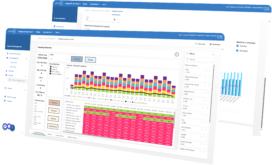
- Capacity Assessment
Assess supplier capacity before long-term bottlenecks become production risk
What is capacity assessment in purchasing?
Capacity assessment in purchasing is the structured evaluation of supplier production capacity, constraints, and risks to ensure reliable supply. It enables procurement teams to identify bottlenecks early, validate supplier capacity commitments, and secure long-term production capacity across the supply chain.
Long-range capacity risk cannot be managed with short-term signals alone
In aerospace and certain manufacturing segments, capacity planning must look far ahead. Demand information is often coarse-grained, not binding, and expressed at a high level, such as end products per quarter. That makes it difficult to judge whether suppliers and sub-tier structures can support future demand. Without structured assessments, bottlenecks stay hidden too long, production facilities are not mapped clearly to constraints, and mitigation actions start too late.
Transform long-range capacity risk into a structured assessment and action process
SupplyOn Capacity Assessments follows a clear process across planning, preparation, execution, and monitoring. It combines supplier maturity assessment, production-facility mapping, scenario-based simulation, on-site execution, action management, and continuous follow-up so customer and supplier can work from one shared assessment logic.
Plan and prepare the assessment with shared scope and maturity review
The process starts with structured assessment creation, scope definition, and resource planning. Customers can create assessments directly in the user interface, specify general details, allocate resources, and assign focal points for review. During preparation, supplier information is gathered, maturity information is prepared, and joint reviews establish the basis for the on-site execution phase. A maturity questionnaire helps assess the general maturity of the supplier and identify specific actions to improve that maturity.
Key features
- Structured assessment setup including scope, resources, and responsibilities
- Consolidated supplier data and maturity input for assessment preparation
- Maturity assessment with integrated action definition
Impact
- Structured and aligned preparation across customer and supplier
- Clear visibility into supplier maturity and readiness
- Earlier identification of improvement actions before execution
Map workcenters and simulate what-if scenarios
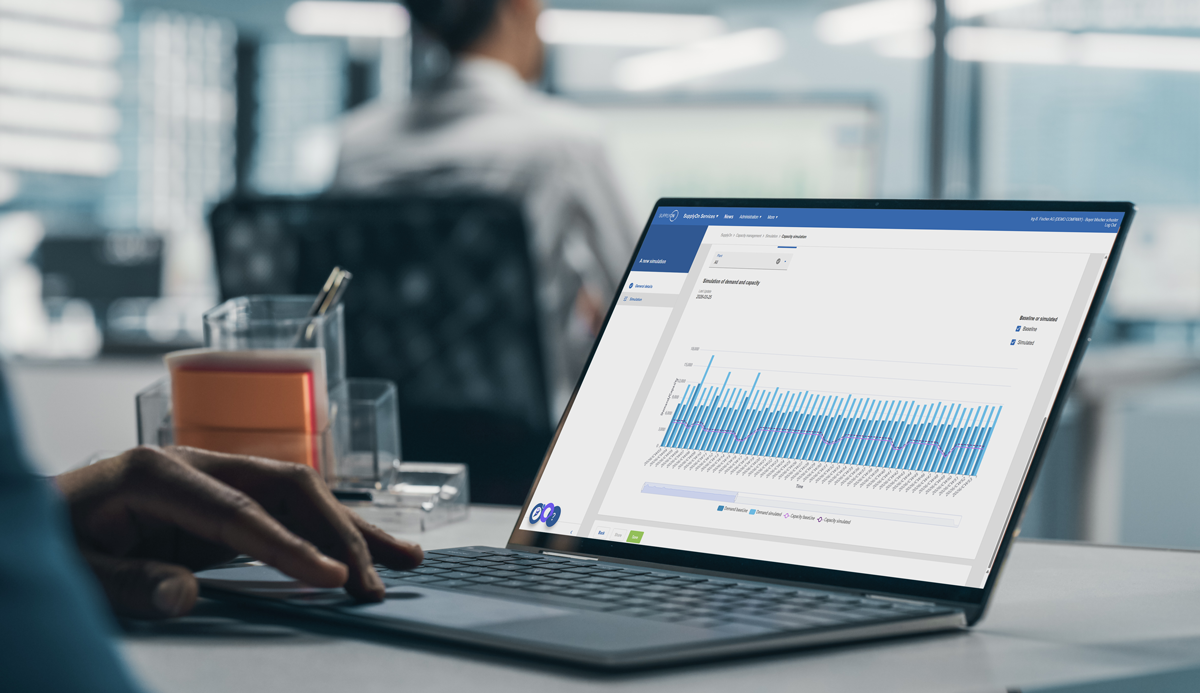
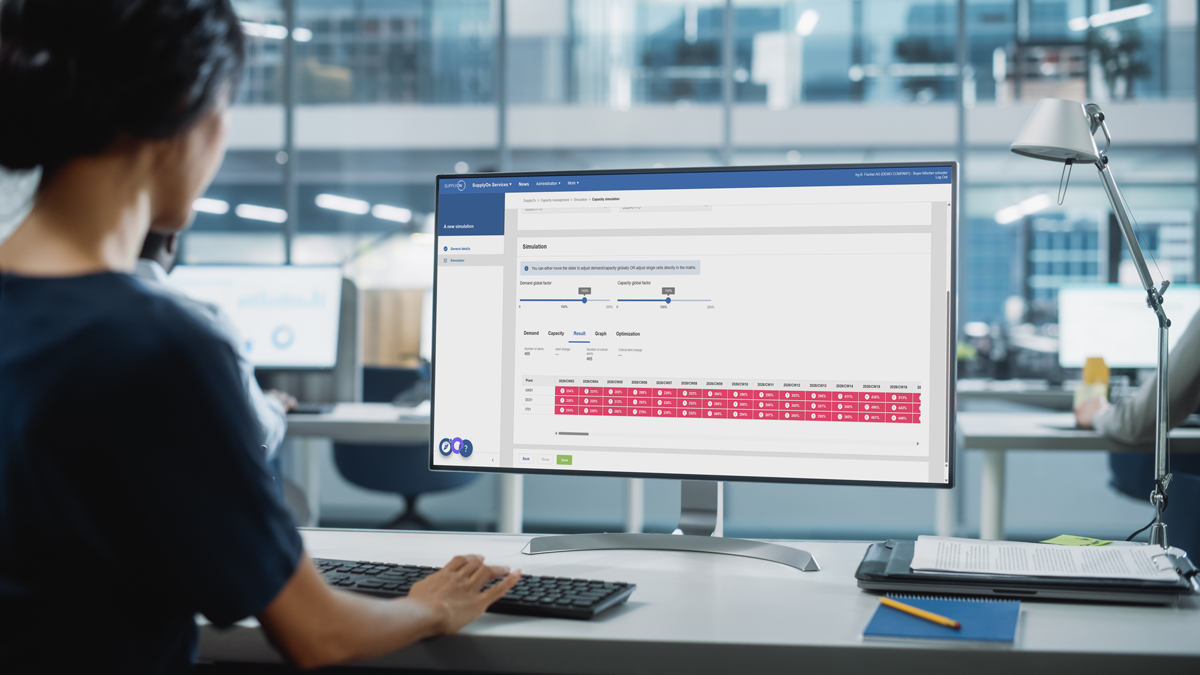
A central part of the solution is the ability to map supplier production facilities to relevant constraints and simulate multiple scenarios with varying demand, load, and capacity information. Workcenters provide the production-facility structure, while tier levels can also be modeled to include relevant sub-tier bottleneck factors. In the scenario definition, teams can compare altered demand and capacity situations and review detailed load information per scenario. This supports long-term capacity securing through what-if simulation and bottleneck analysis.
Key features
- Workcenter-based mapping of supplier production structures
- Tier and sub-tier modeling to include downstream constraints
- Scenario simulation with demand, capacity, and load analysis including action planning
Impact
- End-to-end visibility into capacity constraints across tiers
- Earlier identification of bottlenecks and supply risks
- Stronger basis for long-term capacity planning and mitigation
Capacity risk visibility for better award decisions
Capacity Assessment becomes strategically valuable when it feeds into real award and mitigation decisions. SupplyOn’s sourcing and risk positioning supports this by combining supplier evaluation, risk information, and decision workflows in one environment. That allows teams to use capacity findings not just as a documentation exercise, but as a basis for sourcing scenarios, approval discussions, supplier development, or dual-sourcing decisions where required.
Key features
- Integrated execution with simulation, validation, and data preparation
- Action management with definition, tracking, and follow-up
- Continuous monitoring and reporting including signed assessment documentation
Impact
- Seamless transition from assessment to mitigation
- Reliable execution and follow-up of improvement actions
- Continuous visibility into risk development and mitigation progress
Turn capacity insights into reliable supply decisions
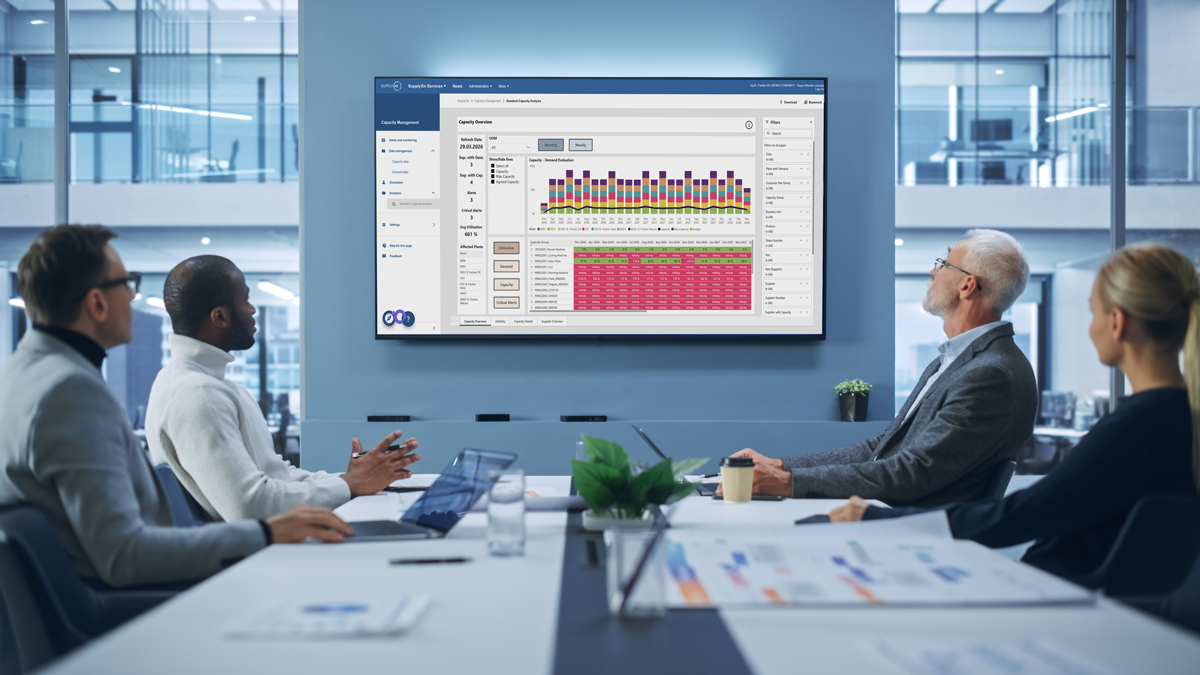
Capacity assessments transform fragmented capacity data into a clear basis for decision-making. By combining structured evaluation, scenario analysis, and continuous follow-up, companies gain the confidence to plan ahead and secure supply.
From capacity uncertainty to reliable, data-driven supply decisions.
Frequently Asked Questions
Capacity assessment in supply chain management refers to the structured evaluation of supplier production capacity to ensure long-term feasibility and reduce supply risks. It supports companies in identifying constraints early, analyzing future scenarios, and maintaining stable supply across complex supplier networks.
The following FAQs cover key aspects such as objectives, process steps, risk identification, and practical application in supplier management.
Secure future supplier capacity with more structure and earlier visibility
Connect maturity review, workcenter mapping, what-if simulation, action planning, and ongoing monitoring in one structured assessment process — so your teams can identify bottlenecks earlier and secure long-term capacity with greater confidence.