- EU CBAM Regulation & Reporting
CBAM Reporting: Collect supplier data and ensure compliance at scale
What is CBAM Reporting?
CBAM reporting is the process of collecting, validating, and submitting carbon emissions data for imported goods under the EU Carbon Border Adjustment Mechanism (CBAM).
The Carbon Border Adjustment Mechanism is an EU regulation designed to increase transparency around embedded emissions in carbon-intensive imports. Manufacturers must collect supplier-specific and product-level emissions data, ensure data accuracy, and maintain auditable records for regulatory compliance.
CBAM reporting becomes unmanageable when supplier data, product data, and compliance workflows stay disconnected
In many organizations, required CBAM data is scattered across suppliers, internal systems, documents, and manual communication. Product-level emissions data is collected through emails and spreadsheets, documents arrive in inconsistent formats, and updates require repeated follow-ups. As a result, reporting becomes time-consuming, error-prone, and difficult to audit.
Transform CBAM reporting into a connected compliance workflow
SupplyOn enables manufacturers to turn fragmented CBAM reporting into a structured and connected compliance process. Instead of managing data across spreadsheets, emails, and disconnected systems, teams can combine supplier collaboration, product data, and regulatory analysis in one workflow.
This ensures faster data collection, clearer regulatory alignment, and a scalable foundation for recurring CBAM reporting.
Structured supplier and product data collection
SupplyOn connects supplier input and product-level data into one structured collection process. Instead of manual requests and fragmented data handling, teams can gather CBAM-relevant information consistently across suppliers and products.
Key Features
- Supplier surveys and self-service data collection
- Part-based product data capture and central storage
- Collection and management of certificates, documents, and declarations
Impact
- Reduced manual effort in collecting CBAM-relevant data
- Higher supplier response rates and data completeness
- Stronger product-level data foundation for reporting cycles

Regulation-focused analysis and compliance control
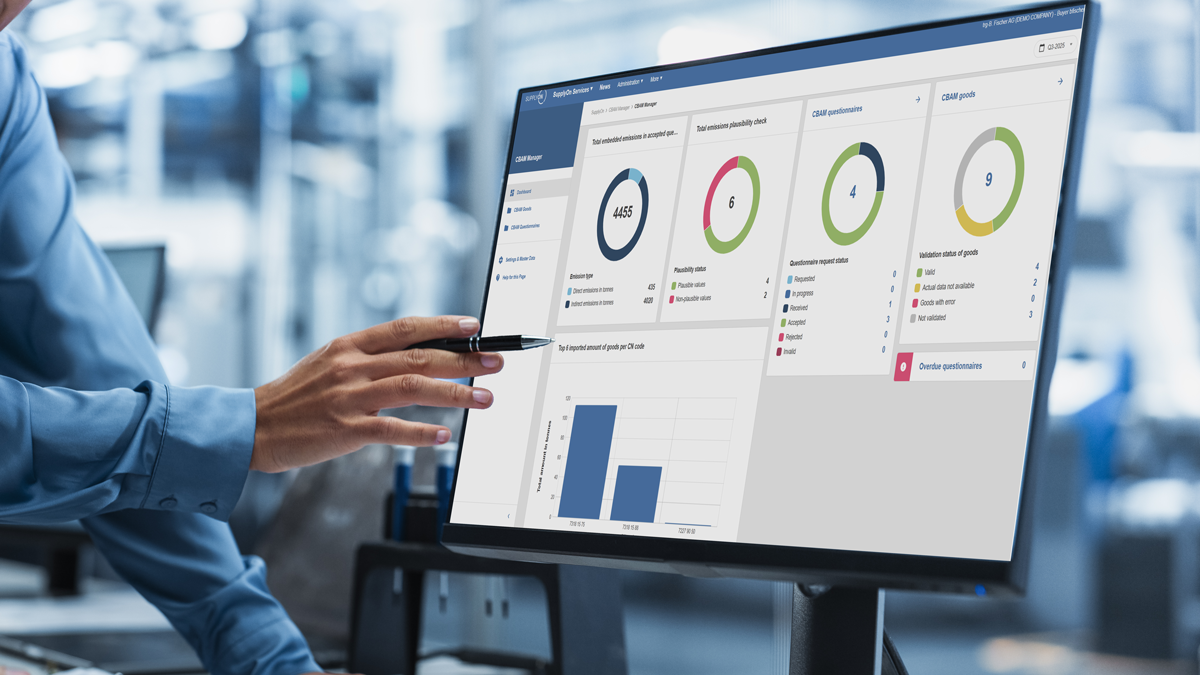
SupplyOn ensures that collected data is not only available, but usable within the correct regulatory context. Teams can structure, filter, and analyze data based on CBAM requirements and evolving compliance needs.
Key Features
- Regulation-focused analysis aligned with reporting requirements
- Integration of external data sources for compliance evaluation
- AI-supported data structuring and enrichment
Impact
- Faster readiness for evolving CBAM reporting requirements
- Reduced effort in building and maintaining compliance data structures
- Improved traceability from data collection to reporting output
Supplier collaboration, data reuse, and process integration
SupplyOn connects CBAM reporting with broader supplier and ESG processes. Collected data can be reused across sourcing, compliance, and sustainability workflows instead of being locked into one reporting cycle.
Key Features
- Integrated supplier collaboration and update workflows
- Reuse of CBAM data across ESG and sourcing processes
- Integration with internal systems and supply chain data
Impact
- Higher return on collected carbon and compliance data
- Reduced duplication across teams and reporting cycles
- Stronger integration of CBAM into operational supplier management
Less manual effort, stronger compliance, and scalable CBAM readiness
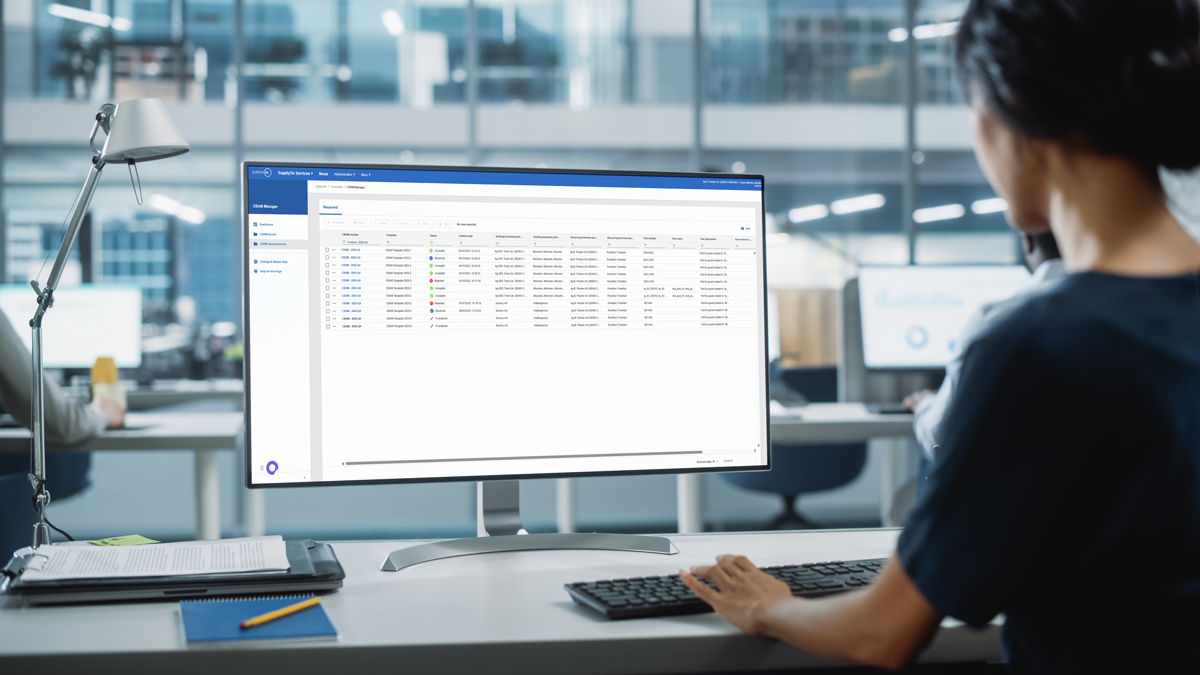
The strongest value drivers for CBAM reporting come from reduced manual effort, reusable data foundations, and a more structured and connected compliance process across suppliers and products.
Less spreadsheet work. Better supplier collaboration. Stronger CBAM readiness built on reusable data.
Frequently Asked Questions
Make CBAM reporting repeatable, traceable, and supplier-connected
Connect supplier surveys, product-level carbon data, documents, and compliance analysis in one structured process — so your teams can reduce reporting effort, improve data quality, and build stronger readiness for recurring CBAM requirements.