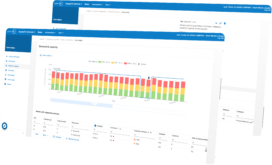
- Capacity Management
Capacity Management: Prevent bottlenecks in your supply chain
What is capacity management in supply chain collaboration?
Capacity management enables manufacturers to compare future material demand with available supplier capacity. This helps identify constraints early, validate capacity gaps, and take action before shortages disrupt production. In a collaborative setup like SupplyOn, this process includes structured supplier feedback, alerts, planning adjustments, and mitigation workflows.
Production plans change constantly. Capacity gaps stay hidden until it’s too late.
When supplier capacity constraints are managed through disconnected tools and manual follow-up, risks stay hidden until production is already exposed. Planners react too late, teams spend time firefighting, and safety stock rises to compensate for uncertainty. SupplyOn helps manufacturers compare future demand against available capacity, detect bottlenecks earlier, and act before shortages disrupt supply.
Transform capacity planning into continuous supply control
Capacity Management acts as the extension of Supply Chain Planning and S&OP toward suppliers. Customers can share capacity needs, receive structured supplier feedback on whether those needs can be fulfilled, and use that feedback to improve planning reliability, simulation, and frequent optimization.
Capacity gap detection
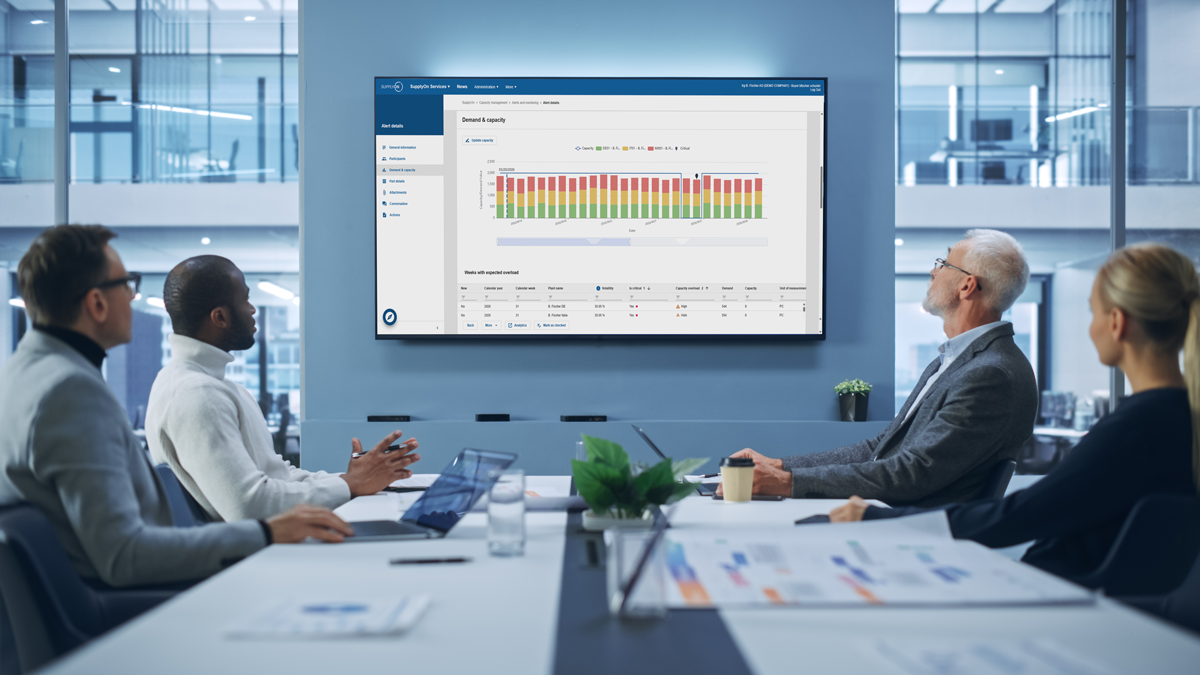
SupplyOn compares future material demand with available supplier capacity, helping planners identify mismatches early and verify where supply risk is building before execution is affected.
Key features
- Demand-versus-capacity comparison
- Gap identification and data verification
- Maintenance of capacity data
Impact
- Earlier visibility into bottlenecks
- Faster detection of supply risk
- Better decisions before shortages escalate

Capacity confirmation & planning adjustments
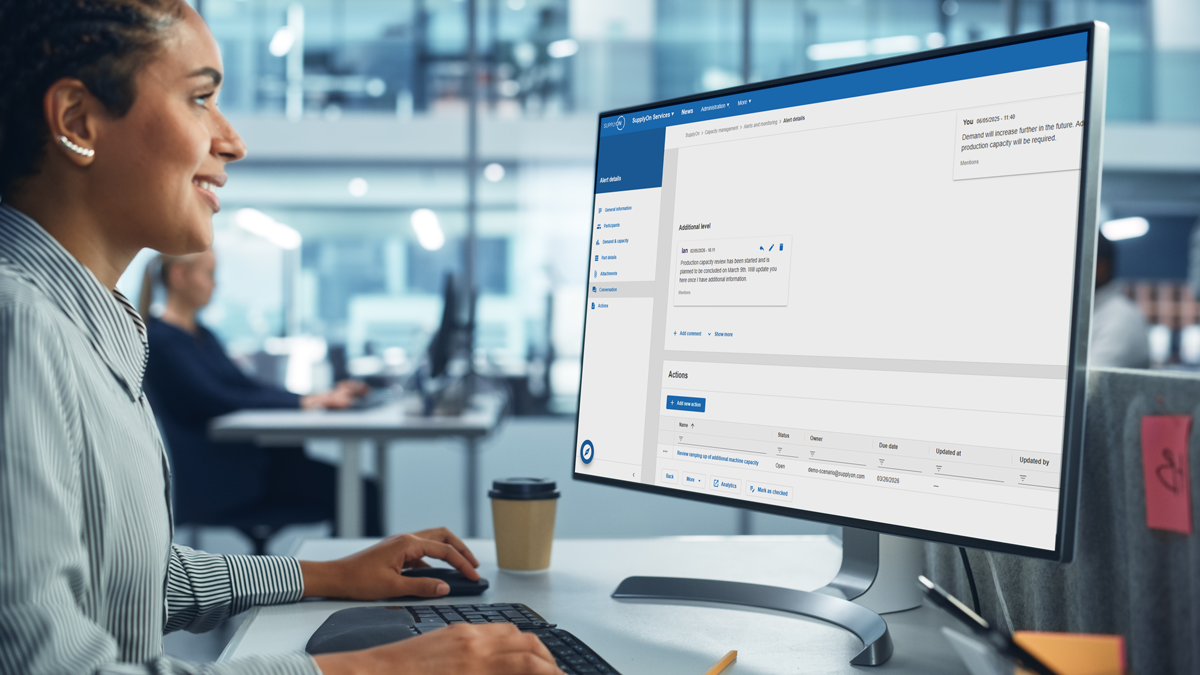
SupplyOn enables automated supplier feedback on whether requested capacity needs can be fulfilled. Capacity confirmations and planning adjustments make it easier for customers to compare demand with available supplier capacity, simulate alternatives, and optimize plans more frequently. Cluster-based maintenance simplifies capacity data upkeep for suppliers by reducing manual maintenance effort across recurring capacity structures.
Key features
- Definition of cluster and capacity tolerances
- Planning adjustment workflows
- Extra capacity management
Impact
- More realistic supply planning
- Better alignment between demand and supplier capability
- Lower dependence on manual clarification
Exception alerts & mitigation
SupplyOn highlights critical capacity issues through dashboard and email alerts, so teams can focus on the exceptions that matter most. From there, they can resolve alerts directly or create actions and mitigation measures to stabilize supply.
Key features
- Dashboard alerts
- Email alerts
- Resolve alert or create action
- Mitigation support
Impact
- Faster response to critical deviations
- Less firefighting in daily operations
- Stronger control over supply continuity
Reduce firefighting. Increase supply safety.
SupplyOn helps teams increase supply safety through seamless visibility on demands and deliveries, reduce follow-up effort, and improve planning reliability through earlier detection of capacity gaps.
Less travel-heavy coordination. Better capability evidence. Stronger launch decisions before SOP.
Frequently Asked Questions
Stay ahead of every change in demand
Build a connected planning process that gives buyers and suppliers earlier visibility, faster response, and stronger control over future supply risks.