- PCF Exchange
Turn product carbon footprint data into a scalable supplier exchange process
Exchange product carbon footprint data across the product lifecycle
Product carbon footprint data can support sourcing decisions early in the product lifecycle and evolve as products and production processes mature.
- Collect: Request planned PCF values from suppliers during sourcing.
- Evaluate: Factor product-level carbon information into purchasing decisions.
- Update: Collect actual PCF values at start of production as more precise information becomes available.
- Maintain: Update PCF values over time to reflect process improvements and more current footprint information.
Product carbon footprint programs become difficult to scale when data exchange stays fragmented
PCF data is often requested through spreadsheets or email, while methodologies are not always transparent and product-level information remains disconnected from the actual supplier network. This creates manual effort and limits how effectively teams can use carbon data across sourcing and sustainability processes.
Connect product carbon footprint data with your supplier network
SupplyOn turns PCF requests into a structured supplier exchange process. Manufacturers can collect part-based carbon information from suppliers, connect it with their supply network, and reuse product-level sustainability data across sourcing and broader ESG processes.
Structure supplier-facing PCF data collection
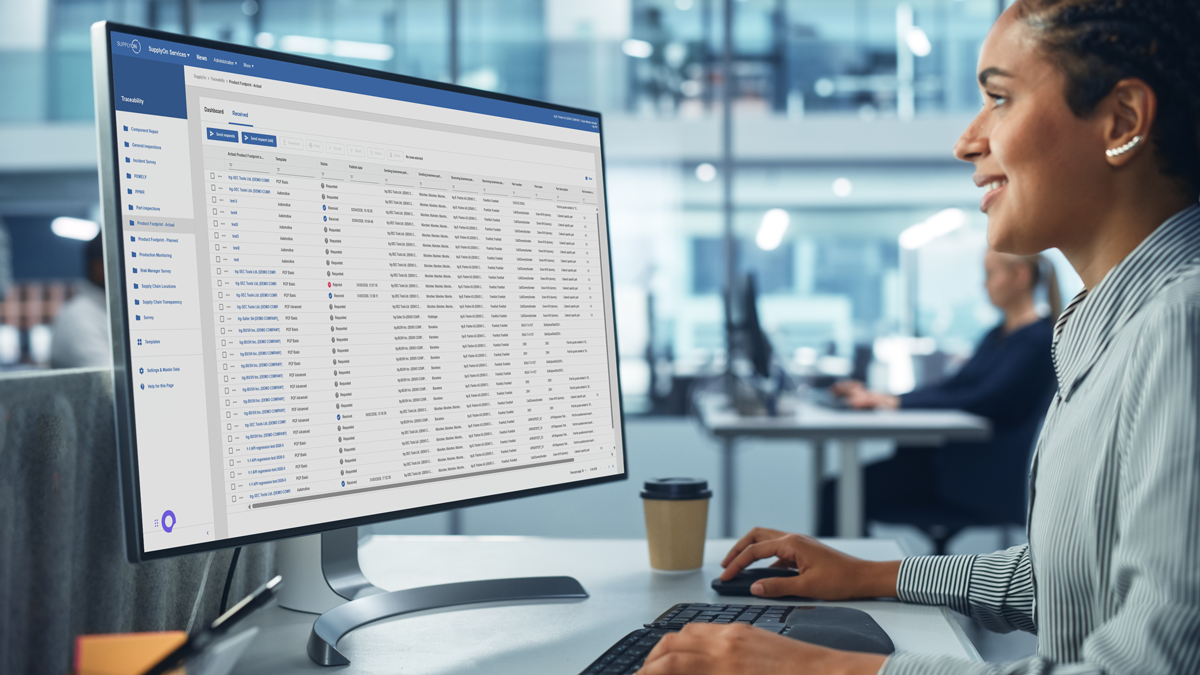
Exchange product carbon footprint data through structured supplier collaboration in the SupplyOn portal. Collect part-based ESG information from suppliers and maintain PCF values as products and production processes evolve.
Business impact
- Reduce manual effort in collecting PCF information
- Improve supplier participation in footprint exchange
- Scale product-level carbon data collection across suppliers and products

Extend PCF exchange across networks and ecosystems
Use SupplyOn’s open multi-tier supplier network, ecosystem connectivity, and common integration standards to exchange PCF data across business partners and supply chain tiers.
Business impact
- Scale PCF exchange faster across the supplier base
- Improve interoperability across ecosystems and business partners
- Reduce friction when extending carbon data exchange beyond Tier 1
Reuse PCF data across ESG and product processes
Connect PCF information with broader product sustainability data such as recycling shares, secondary material shares, and packaging-related information, and integrate it into wider ESG, product, and supply chain processes.
Business impact
- Increase the value of collected carbon data
- Reduce duplication across ESG and product transparency initiatives
- Build a stronger foundation for sustainable product and compliance programs

Move beyond ad hoc PCF data collection
A connected PCF exchange process reduces the effort required to collect product-level carbon information while making that data available for broader sourcing and sustainability needs.
Less static reporting. More performance transparency. Faster improvement where it matters most.
Frequently Asked Questions
Explore how structured PCF exchange can work across your supplier network
See how SupplyOn connects product-level carbon data, supplier collaboration, and ecosystem-based exchange across the PCF lifecycle.