Skip to content
A digital world map displayed on a computer screen, highlighting countries in different colours, with a blue navigation bar at the top and sidebar menu on the left.
  • Supply Chain Locations

Foundational location data for sourcing, risk, compliance, and quality use cases

Supply Chain Locations provides the foundational location data basis for sourcing, risk, compliance, and quality use cases. The strongest direct process integration is with Sourcing. In the other areas, the value is that structured location data creates a common basis for analysis, transparency, and decision support rather than already being fully integrated into all adjacent processes and tools.

The Challenge

Most supply chains go dark beyond direct suppliers

Many organizations still have limited visibility beyond Tier 1. Critical sub-supplier sites, process dependencies, and geographic concentrations remain hidden until a disruption, audit, or quality issue forces teams to investigate under pressure. At the same time, regulations such as LkSG, UFLPA, and CSRD are increasing the need for structured, auditable supply chain documentation. SupplyOn helps manufacturers replace spreadsheet-based data collection with a digital process that maps sites, process steps, and part relationships across the n-tier network.

See beyond Tier 1

Map supplier locations and sub-supplier locations across the supply chain instead of relying only on direct-supplier visibility.

Trace dependencies to the exact site and process step

Connect parts and items to manufacturing sites and relevant process steps so teams can understand where risk, quality issues, and capacity dependencies actually sit.

Replace manual supplier outreach with structured requests

Use standardized request, response, reminder, validation, and approval workflows instead of email threads and spreadsheet chasing.

Build compliance, risk, and sourcing decisions on real supply chain data

Create a trusted data basis for regulatory reporting, risk analysis, dual-sourcing decisions, and root-cause investigations.

The Solution

Transform N-Tier Mapping into a Controlled, Auditable Process

SupplyOn Supply Chain Locations is designed to create multi-level transparency across the manufacturing footprint of your supply chain. It combines supplier location data, process mapping, and part-level relationships in one central repository, while connecting that data to sourcing, risk, compliance, quality, and approval workflows. Instead of treating n-tier mapping as a one-off project, teams can run it as a repeatable digital process.

Site, Process, and Part Mapping Across Tiers

SupplyOn allows suppliers to map their own manufacturing locations and, where needed, the locations of sub-suppliers. Locations can be described with name, address, location type, and geo data, then linked to relevant parts, items, and production steps. This creates a deeper view of the supply chain than a simple supplier list by showing how specific parts flow through specific sites and processes.

Key Features
  • Mapping of supplier and sub-supplier locations
  • Site data including address, location type, and geo data
  • Linking of locations to parts, items, and process steps
  • Central repository for n-tier supply chain location data
Impact
  • Better visibility into hidden dependencies beyond Tier 1
  • Faster understanding of where critical parts are actually made
  • Stronger basis for site-level and process-level risk analysis
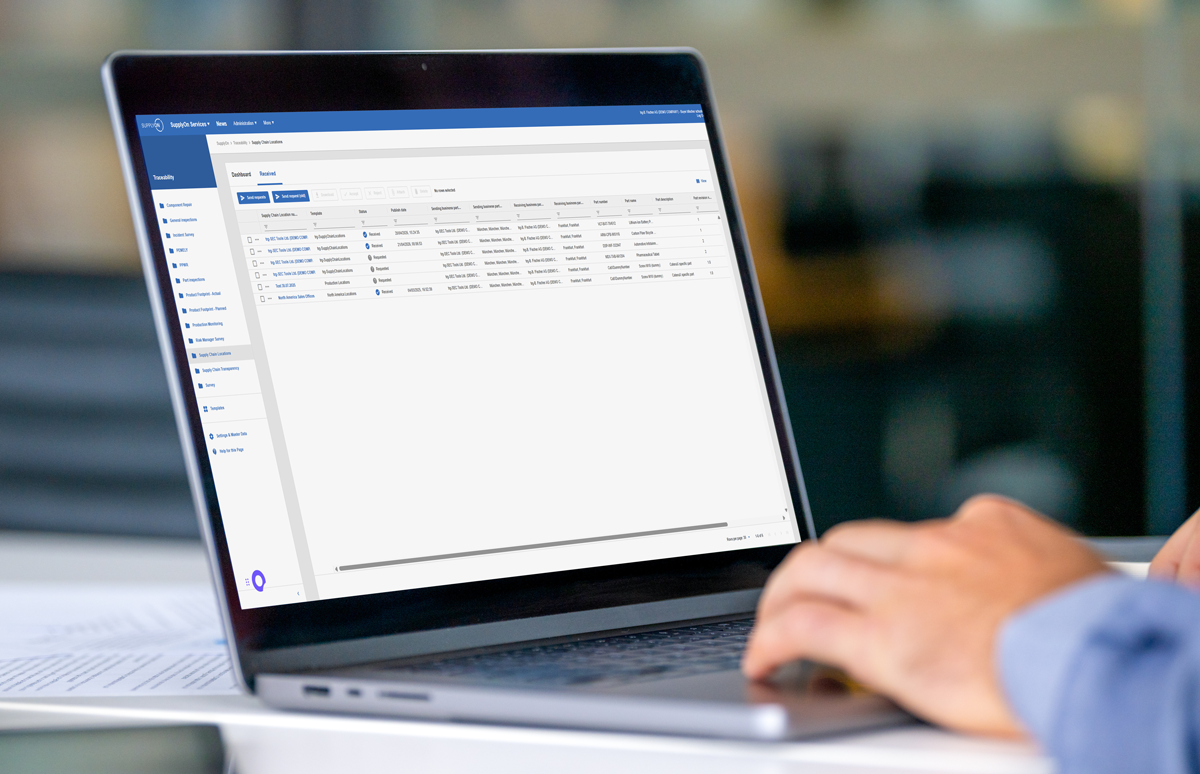
A person uses a laptop displaying a data management or dashboard interface with tables, filters, and navigation menus.
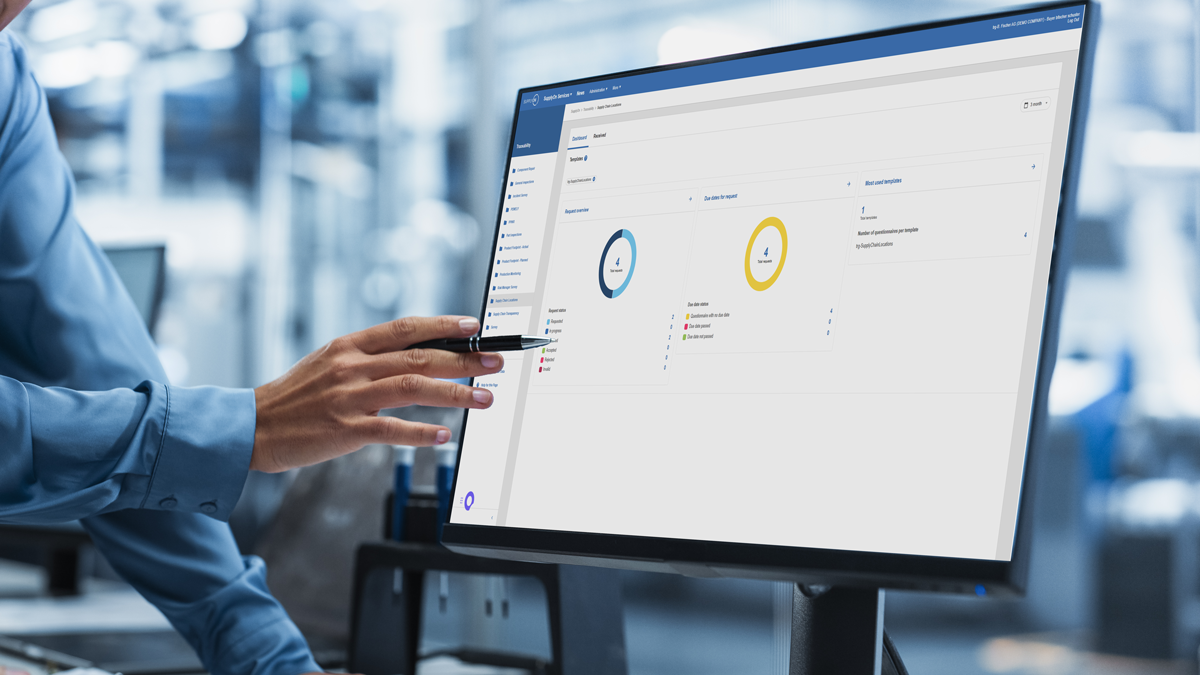
Person pointing at a computer monitor displaying analytics dashboards with circular charts and data on a management software interface in an office setting.

Structured Requests, Validation, and Approval

SupplyOn replaces ad hoc data collection with a structured workflow: prepare, request, enter, map and validate, review and approve, then report. Buyers can define required information and deadlines using standardized templates, suppliers receive guided requests, automated reminders drive response rates, and built-in validation checks completeness before submission. Teams can then review responses, request clarifications, and approve the mapping in a controlled process.

Key Features
  • Standardized request templates and deadline management
  • Automated supplier notifications and reminders
  • Built-in validation for completeness and consistency
  • Review, clarification, and approval workflow
Impact
  • Less manual effort in data collection and follow-up
  • Higher response quality from suppliers
  • More reliable and auditable supply chain mapping

Integrated Visibility for Risk, Compliance, Sourcing, and Quality

SupplyOn connects Supply Chain Locations to surrounding business processes instead of isolating it as static documentation. The platform supports integration with sourcing, project management, technical review, and source-to-contract processes, while also providing a data basis for compliance reporting, PPAP-related dependency analysis, root-cause investigations, and geographic or single-source risk detection. Data can be integrated into other systems through APIs, giving teams a more usable foundation for action.

Key Features
  • Integration with sourcing and source-to-contract workflows
  • Support for quality and PPAP-related dependency analysis
  • Data basis for compliance and reporting use cases
  • API-based integration with risk, compliance, and sourcing systems
Impact
  • Better decisions on dual sourcing and supplier strategy
  • Faster root-cause analysis for quality and compliance issues
  • Stronger readiness for audits, reporting, and supply chain risk reviews
A man sits at a desk in a modern office, typing on a keyboard and viewing a form on a large desktop monitor.

Relevant ROI for supply chain locations and n-tier transparency

The strongest value drivers for Supply Chain Locations come from higher response rates, lower manual collection effort, faster audit preparation, and better decision-making for risk, sourcing, compliance, and quality use cases.

3x higher

response rate through structured supplier data collection and automated workflows

60% less

manual work compared with spreadsheet- and email-based collection processes

Better decisions

through part-, site-, and process-level transparency across the n-tier network

See deeper. Act smarter. Build resilience.

Frequently Asked Questions

Supply Chain Locations is SupplyOn’s capability for mapping manufacturing sites, process steps, and part-level relationships across the n-tier supply chain. It helps manufacturers create structured visibility beyond Tier 1 instead of relying only on direct supplier information.

SupplyOn can capture supplier and sub-supplier locations, including name, address, location type, and geo data. Those locations can then be linked to parts, items, process steps, and multi-tier relationships to create a deeper supply chain map.

A supplier list shows who your suppliers are. Supply Chain Locations shows where parts are made, which process steps are involved, and how sites relate across tiers. That makes it much more useful for risk analysis, compliance, sourcing, and root-cause investigation.

Suppliers receive structured requests to map their own locations and, where applicable, sub-supplier locations. They enter the required information in a guided workflow, the system validates completeness, and buyers can review, clarify, and approve the resulting supply chain mapping.

Yes. Supply Chain Locations is designed to connect locations with parts, items, and process steps, so teams can understand dependencies at a more operational level instead of only at the supplier-company level.

SupplyOn replaces manual outreach with standardized requests, automated reminders, guided supplier entry, and built-in validation. This makes participation easier for suppliers and improves response quality and response rates.

Illuminate every link in your value chain

Map supplier sites, process steps, and part relationships across tiers in one structured process — so your teams can strengthen resilience, improve compliance readiness, and make smarter sourcing and risk decisions.