- Auctions
Online auctions for sourcing: Structured and transparent
How sourcing auctions work in practice
Sourcing auctions deliver the best results when they are embedded in a structured sourcing process rather than treated as isolated pricing events. To achieve this, teams need to align market conditions, supplier readiness, and auction design before execution begins.
The process starts with assessing whether an auction is the right approach for the specific sourcing scenario. This includes evaluating supplier comparability, market dynamics, and volume structures to ensure a competitive environment. Suppliers are then prepared and aligned, with clearly defined rules and bidding logic creating the foundation for a fair and effective auction.
During the live event, auctions enable dynamic competition in real time while maintaining full transparency and control. After completion, results are evaluated in context and translated into award decisions, negotiations, and measurable sourcing outcomes.
Auctions do not fail because of technology – they fail when the setup does not match the market conditions.
In practice, sourcing auctions often fall short because critical elements of the process are not properly aligned. Instead of creating competitive pressure and clear outcomes, they introduce complexity, reduce comparability, and limit their impact on real sourcing decisions.
Sourcing Auctions: A structured and controlled negotiation approach
SupplyOn Auctions enables manufacturers to run sourcing auctions as a structured and controlled negotiation process — not just as isolated pricing events.
Buyers can define the right strategy, set up auction rules, prepare suppliers, and execute events with the appropriate level of transparency. Results are then translated into award decisions, negotiations, and measurable savings.
Auction fit and strategy design
The first question is not which auction type to use. It is whether an auction is the right instrument at all. SupplyOn supports a disciplined preparation phase where buyers assess the market situation, compare supplier structures, define whether a contract should be awarded directly or followed by final negotiation, and decide which visibility model and parameter logic best support the event. This is especially important when qualification requirements, incumbent advantages, or distribution logic make a simplistic price event risky.
Key Features
- Evaluation of market conditions, supplier comparability, and volume structure
- Definition of target outcome, award logic, and negotiation path
- Setup of auction parameters and strategy aligned with the sourcing scenario
Impact
- Strong alignment between auction design and sourcing objectives
- Reduced risk of failed or ineffective auction events
- Increased negotiation leverage through structured preparation


Choosing the right auction type for sourcing
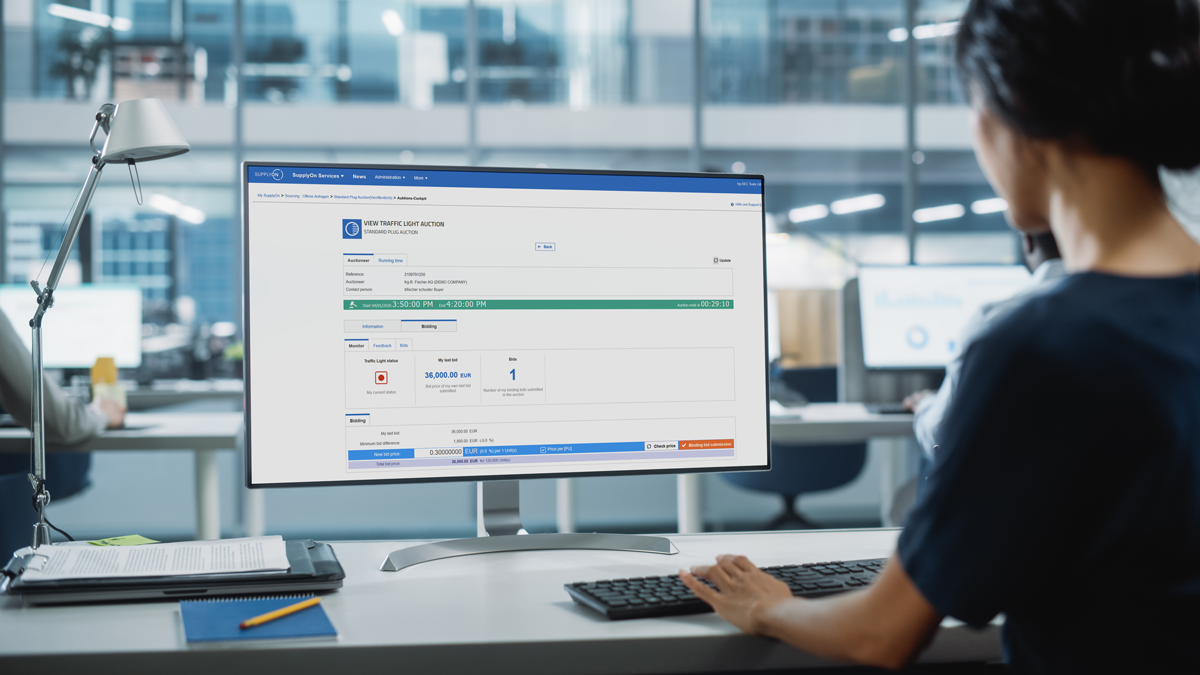
SupplyOn supports multiple auction types so buyers can choose the right competitive logic for the sourcing case. English reverse auctions maximize transparency and direct price pressure. Dynamic reverse auctions support continuous competition across bidders. Traffic light auctions are useful when buyer control is needed in more complex negotiations. Japanese reverse auctions force active supplier commitment at each level. Dutch forward auctions enable fast closure on accepted price levels. First-price sealed bid auctions are suited to confidential one-time bidding where competitive feedback should be suppressed.
Key Features
- Selection of auction types based on transparency, control, and competitive dynamics
- Support for multiple auction formats across different sourcing scenarios
- Flexible configuration of bidding logic and supplier visibility
Impact
- Better fit between auction format and supplier situation
- Optimized competitive tension without losing control
- More effective bidding behavior aligned with negotiation goals
Supplier enablement, execution, and outcomes
Auction outcomes depend heavily on execution discipline. SupplyOn supports the operational path from supplier communication and training through test auctions, live auction scheduling, login monitoring, hotline support, and escalation handling. After the event, buyers can evaluate prices, compare suppliers, and decide whether to award directly, continue with the best bidders, implement supplier changes, or realize negotiated savings through the downstream sourcing process.
Key Features
- Supplier onboarding, communication, and training before the auction
- Controlled live execution with monitoring, support, and escalation handling
- Structured evaluation and transition into award or negotiation
Impact
- Lower execution risk on live auction day
- Higher supplier participation quality and readiness
- Faster and more reliable transition from auction to sourcing decisions
Drive savings through structured competition and faster negotiations
The strongest value drivers for Auctions come from shorter negotiation cycles, higher competitive pressure, lower sourcing-management effort, and stronger realization of price improvements when the auction is used in the right market situation and with the right setup.
Better auction decisions. Stronger competition. Measurable sourcing outcomes.
Frequently Asked Questions
Run auctions like a sourcing expert and not as a price experiment
Connect auction strategy, parameter design, supplier enablement, live execution, and award follow-up in one structured process — so your teams can negotiate faster, create stronger competition, and realize savings with more control.