- VMI | Kanban | JIT/JIS
Keep replenishment synchronized with real demand
From demand signal to goods receipt
VMI, Kanban, and JIT/JIS use different replenishment approaches, but each depends on connected information and execution across the direct-material flow.
- Signal demand or call-off requirements: Define material requirements through the relevant demand or call-off process.
- Coordinate replenishment with suppliers: Use the appropriate replenishment method for the supplier or material.
- Execute delivery: Move material through delivery, shipment notification, and transport processes.
- Receive material: Complete the inbound flow through goods receipt.
Lean replenishment becomes harder when processes and supply signals are disconnected
VMI, Kanban, and JIT/JIS depend on aligned demand, inventory, supplier execution, and delivery information. When teams manage these processes through separate systems, manual updates, and email, visibility decreases and responding to exceptions becomes harder.
Manage different replenishment methods through one connected process
SupplyOn supports VMI, Kanban, and JIT/JIS within Supply Chain Collaboration and connects replenishment with operational procurement, delivery management, transport, goods receipt, and visibility.
Standardize VMI, Kanban, and JIT/JIS collaboration
Manage different direct-material replenishment and call-off methods through one buyer and supplier environment. SupplyOn connects demand and call-off processes with delivery and goods receipt so teams do not need separate collaboration processes for each replenishment model.
Business impact
- Reduce fragmentation across supplier processes
- Create more consistent collaboration across plants and partners
- Improve control over direct-material execution

Support inventory-driven VMI replenishment
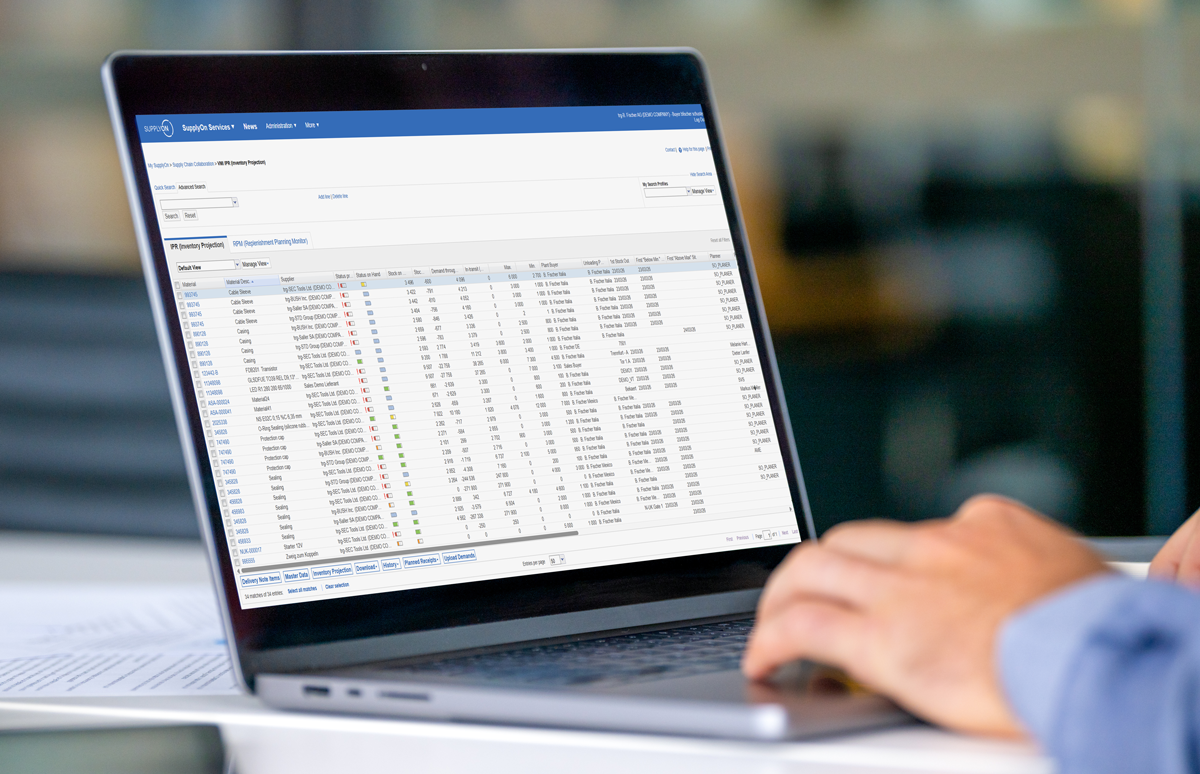
Connect inventory and stock movement data with VMI replenishment collaboration and shared visibility across demand, delivery, and supply status. SupplyOn also provides VMI replenishment proposals to support more structured, data-based supply control.
Business impact
- Improve replenishment reliability
- React earlier to demand or stock changes
- Reduce the need to compensate with excess safety stock
Connect Kanban and JIT/JIS with execution visibility
Connect call-off-driven processes with operational procurement, delivery management, ASN, goods receipt, transport, and visibility. Dashboards, analytics, and exception-based management help teams identify relevant timing, quantity, and execution deviations.
Business impact
- Detect supply deviations faster
- Reduce manual coordination effort
- Strengthen continuity for time-critical delivery processes

See connected replenishment in action
See how SupplyOn brings VMI, Kanban, and JIT/JIS together with the downstream execution processes described above.
Reduce effort and inventory while improving connected execution
SupplyOn positions SCC as the foundation for digitizing direct-material collaboration at scale. Across these processes, the public materials point to faster supplier adoption, lower manual effort, earlier visibility, and reduced safety stock through more reliable, connected execution.
Standardize replenishment across suppliers, reduce manual coordination, and strengthen supply continuity from call-off to goods receipt.
Frequently Asked Questions
See how replenishment connects with supply execution
Explore how SupplyOn manages VMI, Kanban, and JIT/JIS through one standardized environment and connects replenishment with delivery, transport, goods receipt, and visibility.