Skip to content
A computer screen displays a business dashboard with graphs, tables, and filters for inventory distribution and lead time in days.
  • Stock Visibility (1-n-tier)

See inventory risks beyond your direct suppliers

SupplyOn connects stock and replenishment data across multiple supply-chain tiers, combining raw material stock, finished components, demand, goods receipt, and in-transit signals so teams can identify inventory risk earlier.

✓ See stock positions beyond Tier 1
✓ Detect shortages and excess stock earlier
✓ Make replenishment decisions with better context

Multi-Tier Inventory

Inventory problems rarely start at your own plant

Stock risk can develop across plants, suppliers, and deeper supply-chain tiers. Understanding these risks requires more than an internal inventory view: teams need relevant stock and replenishment signals across connected business partners.

  • Beyond Tier 1
    Relevant stock positions and supply signals can sit further upstream across multiple supplier tiers.
  • Across plants and partners
    Inventory information spans different plants, business partners, and locations.
  • In operational context
    Stock levels become more useful when they are viewed together with demand, replenishment, goods receipt, and in-transit material.
The Challenge

Fragmented stock information creates blind spots in replenishment decisions

When stock information is distributed across plants, suppliers, and systems, teams plan with incomplete signals. Shortages may be detected too late, safety stock can increase to compensate for uncertainty, and replenishment decisions lack the context needed to understand where inventory risk is building.

Limited visibility beyond Tier 1

Stock information can remain confined to direct supplier relationships, leaving upstream inventory positions harder to see.

Disconnected stock and replenishment signals

Inventory data viewed in isolation lacks important context from demand, goods receipt, in-transit material, and supplier execution.

Shortages and excess stock surface too late

Without earlier visibility and predictive signals, teams may only identify stock problems once parts are already missing or inventory is already too high.

The SupplyOn Solution

Turn stock data into multi-tier supply visibility

SupplyOn combines stock monitoring, multi-level collaboration, contextual replenishment data, and predictive visibility to help manufacturers understand inventory risk across connected supply-chain tiers.

Monitor stock across multiple supply-chain tiers

SupplyOn combines Stock Monitoring with multi-level collaboration across Tier N. Cross-plant and business-partner views help teams see relevant stock signals beyond direct suppliers and across connected locations.

Business impact
  • Gain earlier visibility into upstream inventory risk  
  • Improve transparency across tiers and locations
  • Reduce surprises caused by hidden stock shortages
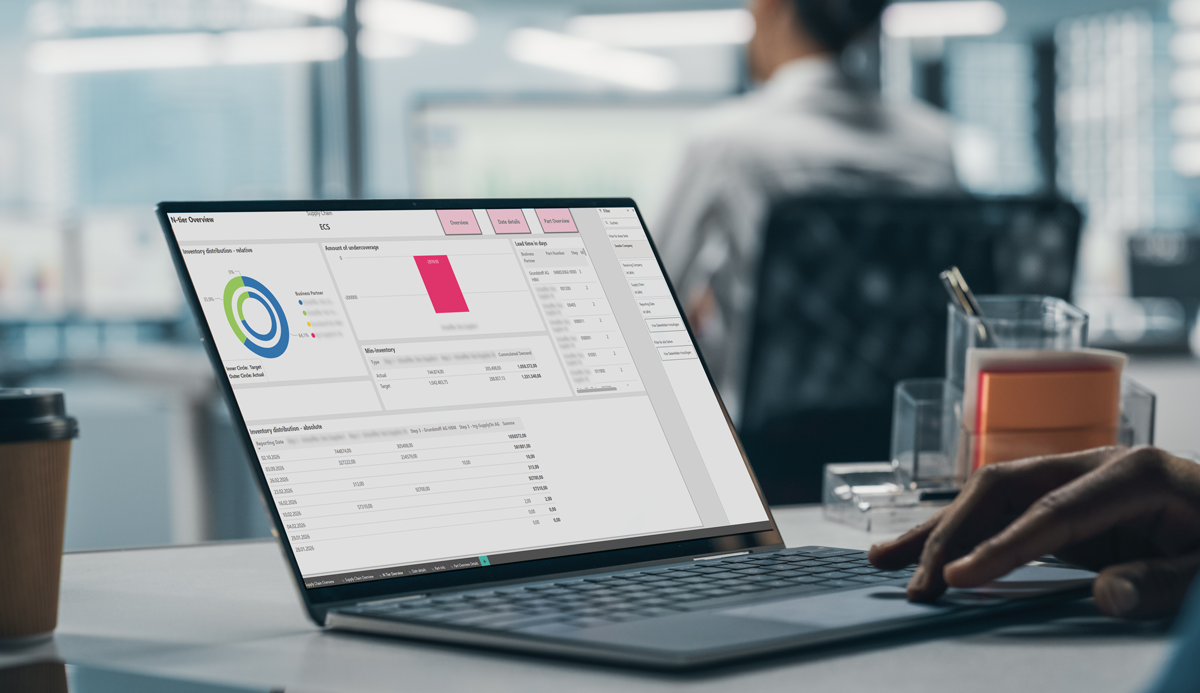
A person works on a laptop displaying data analytics charts and tables in an office setting, with a blurred colleague in the background.
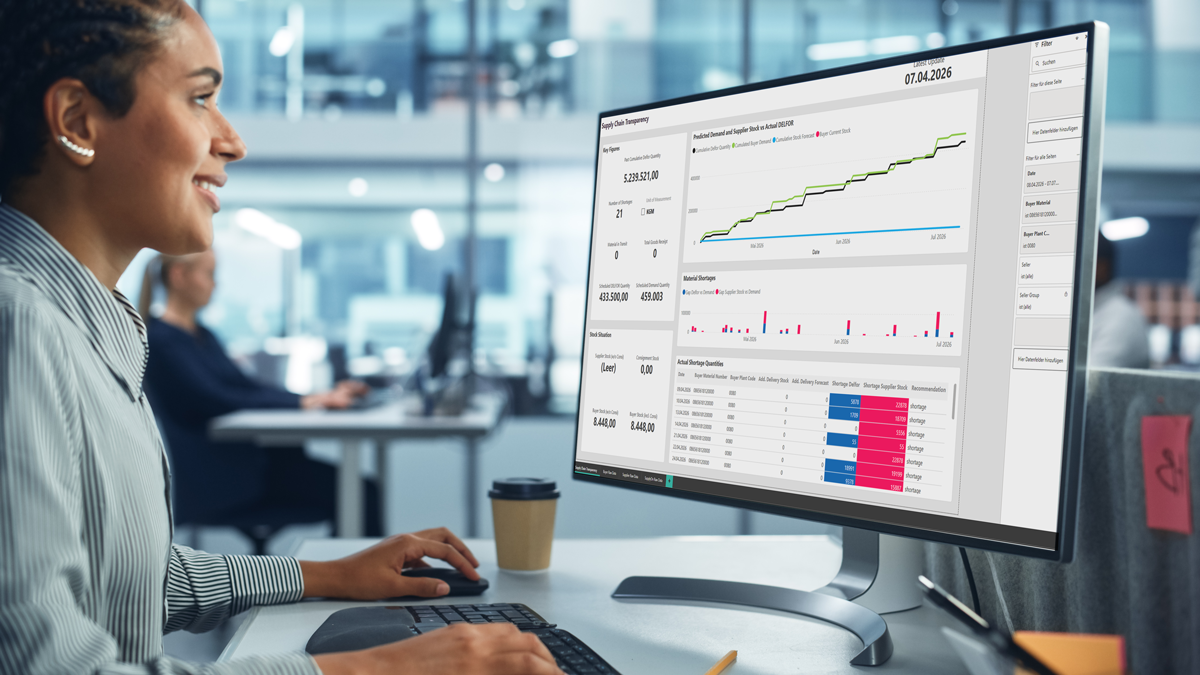
A person works at a desk, viewing business analytics dashboards with charts and graphs on a large computer monitor in a modern office.

Put stock and replenishment data in context

Bring raw material stock, finished component stock, stock and replenishment data together with planned and confirmed demand, goods receipt, and in-transit material. This creates a more decision-ready inventory picture than looking at stock levels alone.

Business impact
  • Make more informed replenishment decisions
  • Understand where stock risk is building
  • Rely less on manual status chasing and assumptions

Use predictive signals to identify inventory risk earlier

SupplyOn connects stock monitoring with predictive visibility, including predictive ETA, supplier delivery predictions, preventive anomaly detection, and missing-part predictions. Dashboards and analytics help teams identify where stock problems may affect supply continuity next.

Business impact
  • Get earlier warning of stock-related supply disruption
  • Prioritize at-risk parts and suppliers faster
  • Improve control over inventory and response timing
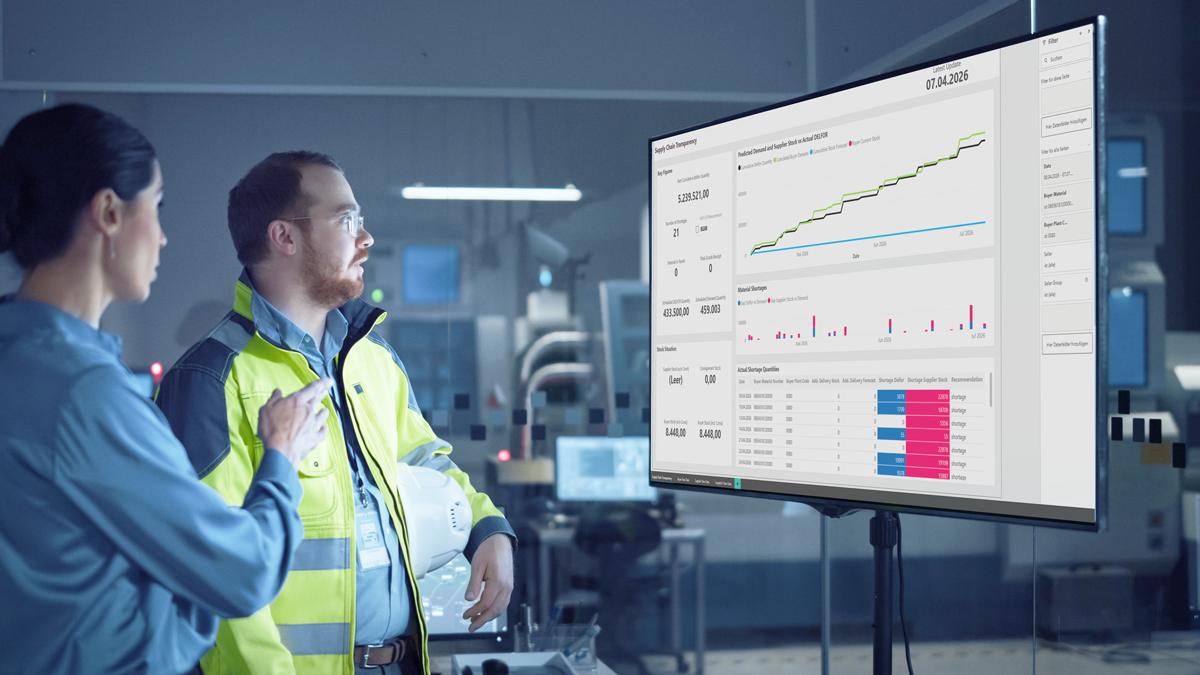
Two people in a modern industrial setting analyse data and charts displayed on a large monitor.
Why it matters

Reduce inventory uncertainty with earlier, more connected visibility

The strongest defensible proof points are the inventory and early-visibility outcomes tied to SupplyOn’s visibility and collaboration model: lower safety stock, faster replenishment, lower working capital, and quicker payback through the network effect.

10–40%

inventory reduction through faster and more plannable replenishment

Up to 30%

less safety stock through early visibility

6-9 months

ROI payback enabled by the SupplyOn network effect and standardized rollout model

Less hidden inventory risk. Lower safety stock. Better replenishment decisions across every relevant tier.

Frequently Asked Questions

SupplyOn Stock Visibility helps manufacturers monitor inventory-related signals across multiple supply-chain tiers, not only direct suppliers. It connects stock and replenishment information with demand, goods receipt, in-transit material, and supplier execution data to provide a broader view of inventory risk across complex supply networks.

SupplyOn Stock Visibility includes raw material stock, finished component stock, stock and replenishment data, planned and confirmed demand, goods receipt, and in-transit material. Combining these signals gives teams more context for understanding inventory positions and replenishment risk.

SupplyOn’s multi-level collaboration model spans Tier N, Tier 2, Tier 1, OEM, and operator levels using the same software approach across the chain. In practice, that means stock-related collaboration and visibility can extend beyond a single supplier relationship and support a more consistent process quality across deeper supply-chain levels.

Internal ERP reporting primarily reflects inventory within a company’s own systems. SupplyOn extends visibility into external supplier and multi-tier supply-chain data and combines stock information with demand, production, goods receipt, delivery, and other partner signals.

Yes. SupplyOn’s visibility capabilities include predictive ETA, supplier delivery predictions, missing-part predictions, preventive anomaly detection, dashboards, and analytics. These signals help teams identify stock-related supply risk earlier.

Earlier visibility into stock and replenishment conditions can reduce the uncertainty that drives additional safety stock. SupplyOn’s current proof points include up to 30% less safety stock through early visibility and 10–40% inventory reduction through faster, more plannable replenishment.

See Stock Visibility in action

See where inventory risk is building before it affects supply

Explore how SupplyOn connects stock and replenishment information across multiple tiers and uses predictive visibility to identify potential inventory problems earlier.