Skip to content
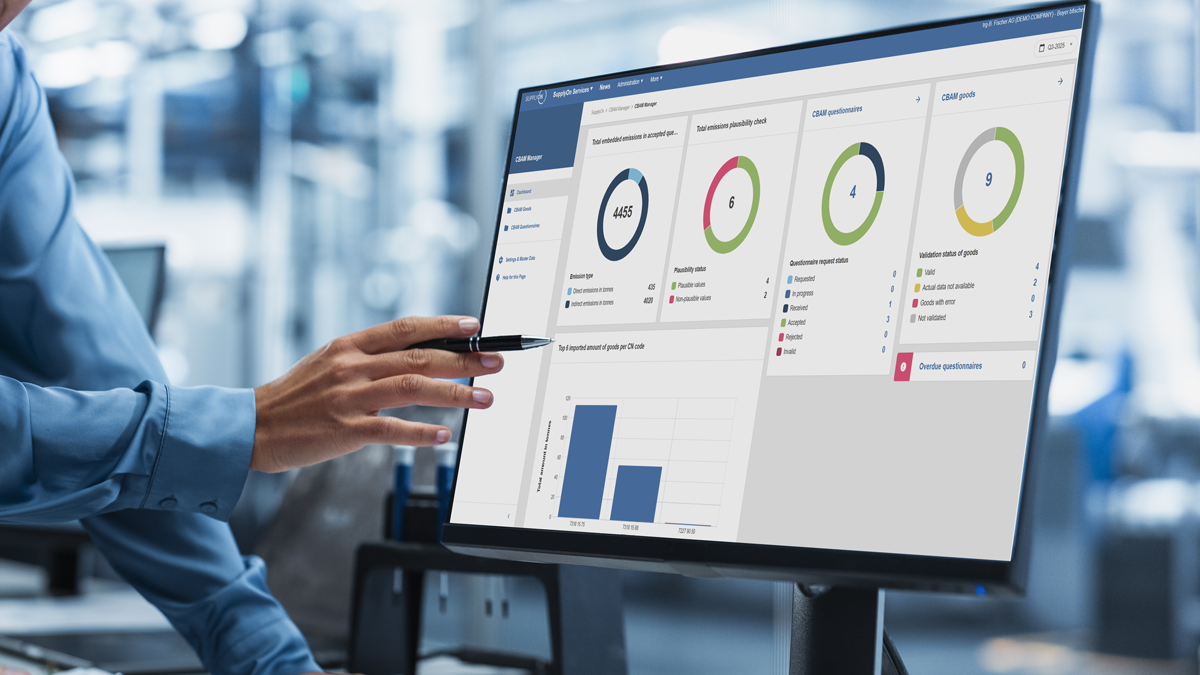
A computer screen displays a dashboard with charts, graphs, and statistics related to CSAM questionnaires and goals in a blue and white interface.
  • EU CBAM Regulation & Reporting

Collect supplier data and ensure CBAM compliance at scale

Manage CBAM reporting with structured supplier and product data, consistent processes, and traceable information across your supply network.

✓ Reduce manual reporting effort
✓ Improve data quality
✓ Strengthen audit readiness

CBAM Reporting Process

From supplier data collection to CBAM reporting

CBAM reporting requires manufacturers and importers to collect supplier-specific and product-level emissions data, validate the information, and maintain auditable records for regulatory reporting.

  1. Identify: Determine which imported goods and related supplier data are relevant for CBAM reporting.
  2. Collect: Gather the required supplier-specific and product-level emissions data.
  3. Validate: Check collected information for completeness and accuracy.
  4. Consolidate: Bring relevant supplier, product, and emissions information together for reporting.
  5. Report: Prepare the required information for CBAM reporting and maintain auditable records.
The Challenge

CBAM reporting becomes difficult when data and processes stay disconnected

Required CBAM data is often scattered across suppliers, internal systems, documents, emails, and spreadsheets. Different formats and levels of data quality make consolidation and validation difficult, while recurring reporting increases manual effort.

Fragmented supplier and product data

CBAM-relevant information is collected across emails, spreadsheets, documents, suppliers, and internal systems instead of through a structured process.

Inconsistent and incomplete data

Supplier information arrives in different formats and quality levels, making it difficult to validate, consolidate, and connect data to the relevant suppliers and products.

Repeated reporting effort

When CBAM is handled as a one-off compliance task, teams rebuild data and processes across reporting cycles instead of reusing existing information.

The Solution

Turn CBAM reporting into a connected compliance process

SupplyOn connects supplier collaboration, product-level data, and regulatory analysis in a structured CBAM reporting process. Teams can collect and manage relevant information, evaluate it in the context of CBAM requirements, and reuse data across reporting cycles and related business processes.

Structure supplier and product data collection

Collect CBAM-relevant information through supplier surveys and self-service workflows. Connect supplier input with part-based product data and centrally manage certificates, documents, and declarations.

Business impact
  • Reduce manual effort in collecting CBAM-relevant data
  • Improve supplier response rates and data completeness
  • Build a stronger product-level data foundation for reporting cycles

A person sits at a desk using a computer displaying a spreadsheet or database interface in a modern office environment.
Person points at a computer monitor displaying business analytics dashboards with charts, graphs, and coloured circular diagrams in an office environment.

Analyze data in the regulatory context

Structure, filter, and analyze collected data based on CBAM requirements and evolving compliance needs. Integrate external data sources and use AI-supported data structuring and enrichment to prepare information for compliance evaluation.

Business impact
  • Prepare faster for evolving CBAM reporting requirements
  • Reduce effort in building and maintaining compliance data structures
  • Improve traceability from data collection to reporting output

Connect supplier collaboration and data reuse

Integrate supplier collaboration and update workflows with CBAM reporting. Reuse collected information across ESG and sourcing processes and connect CBAM data with internal systems and supply chain data.

Business impact
  • Increase the value of collected carbon and compliance data
  • Reduce duplication across teams and reporting cycles
  • Integrate CBAM more closely into operational supplier management
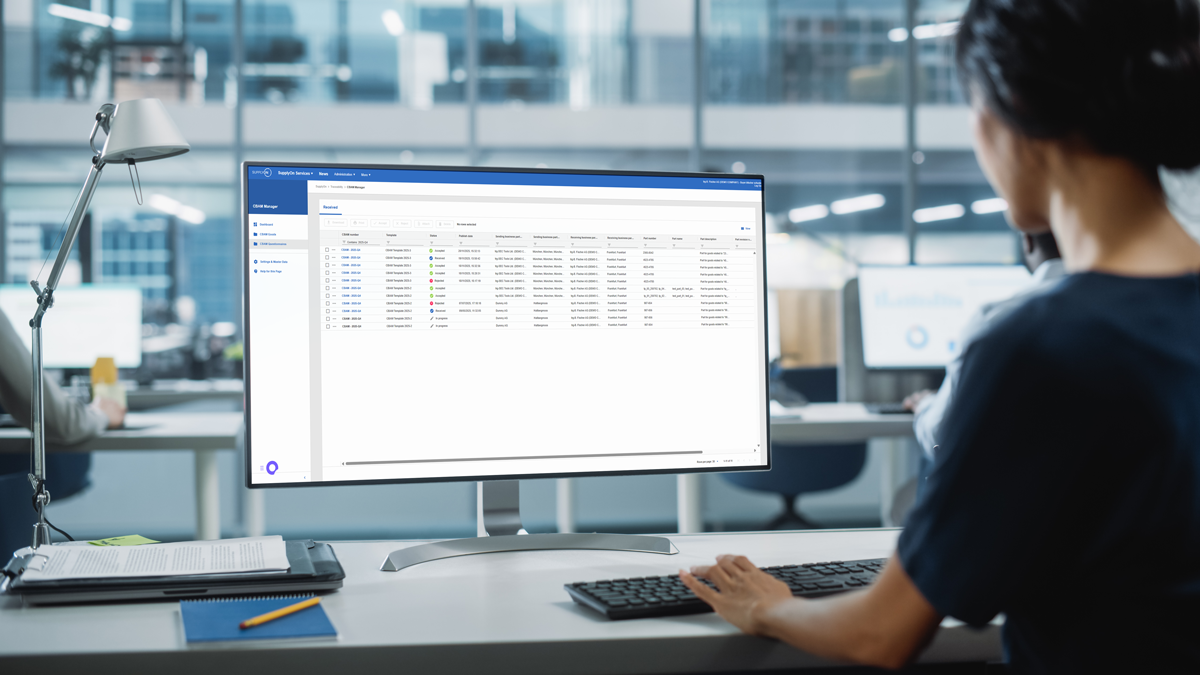
Person working at a desk in a modern office, viewing a data management or spreadsheet software on a large computer monitor.
Why it matters

Reduce reporting effort and build stronger CBAM readiness

A structured and reusable data foundation helps teams manage recurring CBAM requirements across suppliers and products while reducing manual work.

Less manual data collection

Replace repeated supplier outreach and manual consolidation with structured surveys, supplier self-service, and centralized data handling.

Faster supplier engagement

Use established supplier connections and structured workflows to accelerate the collection of required CBAM data.

Better audit readiness

Improve consistency and traceability across supplier input, product data, documents, and reporting processes.

Less spreadsheet work. Better supplier collaboration. Stronger CBAM readiness built on reusable data.

Frequently Asked Questions

SupplyOn CBAM Reporting helps manufacturers collect, structure, analyze, and reuse supplier- and product-level data required for CBAM reporting. It connects supplier collaboration, product data, documents, and compliance analysis in a structured process, helping teams reduce manual reporting effort and maintain traceable information for recurring CBAM requirements.

CBAM reporting requirements apply to companies importing certain carbon-intensive goods into the European Union. Manufacturers and importers need supplier-specific and product-level emissions data and auditable records to meet applicable EU Carbon Border Adjustment Mechanism reporting requirements.

SupplyOn simplifies CBAM reporting by replacing fragmented spreadsheets and manual supplier outreach with structured supplier workflows, centralized data collection, and reusable ESG and product information. Manufacturers can collect supplier responses through surveys and self-service workflows, connect supplier and product-level data, combine supplier input with third-party information, and integrate CBAM-related data into broader sourcing, ESG, and compliance processes.

Yes. SupplyOn collects and manages supplier- and product-level CBAM data through structured supplier workflows and centralized information management. This includes part-based product sustainability data such as Product Carbon Footprint information, supplier declarations, certificates, and compliance-related documents. SupplyOn can also combine supplier-provided information with integrated third-party data sources.

SupplyOn structures and analyzes relevant supplier and product information in the context of CBAM requirements. Teams can filter and evaluate data for specific reporting requirements while maintaining traceability across documents, suppliers, products, and supply chain structures.

Yes. Teams can reuse collected CBAM data across reporting cycles as well as ESG, sourcing, and compliance processes. Carbon and ESG information can support sourcing decisions, supplier requirements, and contract-related compliance activities while connecting with ERP systems and broader carbon management initiatives.

Manufacturing supply chains require supplier-specific and product-level carbon data across complex direct-material networks. SupplyOn connects supplier collaboration, product-related ESG data, compliance processes, and multi-tier supply chain information in one environment focused on manufacturing supply chains.

Make CBAM reporting repeatable, traceable, and supplier-connected

Connect supplier surveys, product-level carbon data, documents, and compliance analysis in one structured process — so your teams can reduce reporting effort, improve data quality, and build stronger readiness for recurring CBAM requirements.