- Supply Chain Risk Management
Turn supply chain risk signals into earlier decisions and faster mitigation
What is supply chain risk management?
Supply chain risk management is the process of identifying, monitoring, and mitigating risks across suppliers, locations, and materials. It connects risk signals with operational impact to enable faster decisions and more effective disruption response.
Supply chain risk is systemic, multi-layered, and constantly evolving
Most supply chain risk tools still focus on isolated supplier ratings or disconnected risk feeds. But today’s disruptions are broader and more interconnected: floods, earthquakes, geopolitical shifts, trade restrictions, ESG pressure, climate risk, and supply continuity issues can all ripple across the network at the same time.
The real challenge is not just spotting risk. It is understanding which suppliers, locations, materials, and pending deliveries are actually affected — and how fast you can respond.
SupplyOn helps manufacturers connect supplier risk to the real supply chain so teams can move from fragmented monitoring to practical mitigation.
Transform supply chain risk monitoring into integrated risk and crisis management
SupplyOn connects strategic risk management and operational incident management in one platform. Instead of treating risk as a separate reporting exercise, teams can analyze supplier exposure, monitor incidents, assess material impact, trigger supplier collaboration, and reflect risk directly into operational supply chain processes.
Strategic supply chain risk visibility
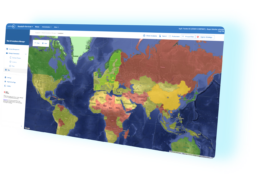
SupplyOn helps manufacturers manage supply chain risk based on supplier manufacturing locations and other critical supply chain sites. Teams map supplier locations to geographic and risk layers. They evaluate exposure by supplier or product group. They also analyze how risks such as flooding, seismic activity, climate developments, and geopolitical pressure affect the supply base over time.
Key features
- Supplier and location-based risk mapping with geographic and geopolitical overlays
- Configurable risk layers and traffic-light visualisation
- Role-based dashboards for procurement and risk teams
Impact
- Earlier visibility into supplier exposure
- Better supplier and sourcing decisions
- Stronger preparation for long-term resilience

Incident impact and material-level risk assessment
When a disruption happens, SupplyOn helps teams move beyond generic incident alerts. Current incidents can be mapped directly to suppliers, locations, materials, and open operational flows. That gives users a direct view of which pending deliveries may be affected and where immediate action is required. Instead of asking “Who could be exposed?”, teams can answer “What is already affected, and what happens next?”
Key features
- Incident and in-crisis monitoring with detailed risk overview
- Direct mapping of incidents to suppliers, materials, and pending deliveries
- Part- and material-level visibility into disruption impact
Impact
- Faster understanding of operational risk
- Better prioritisation of affected suppliers and materials
- Shorter response time during disruptions
Supplier surveys, collaboration, and mitigation
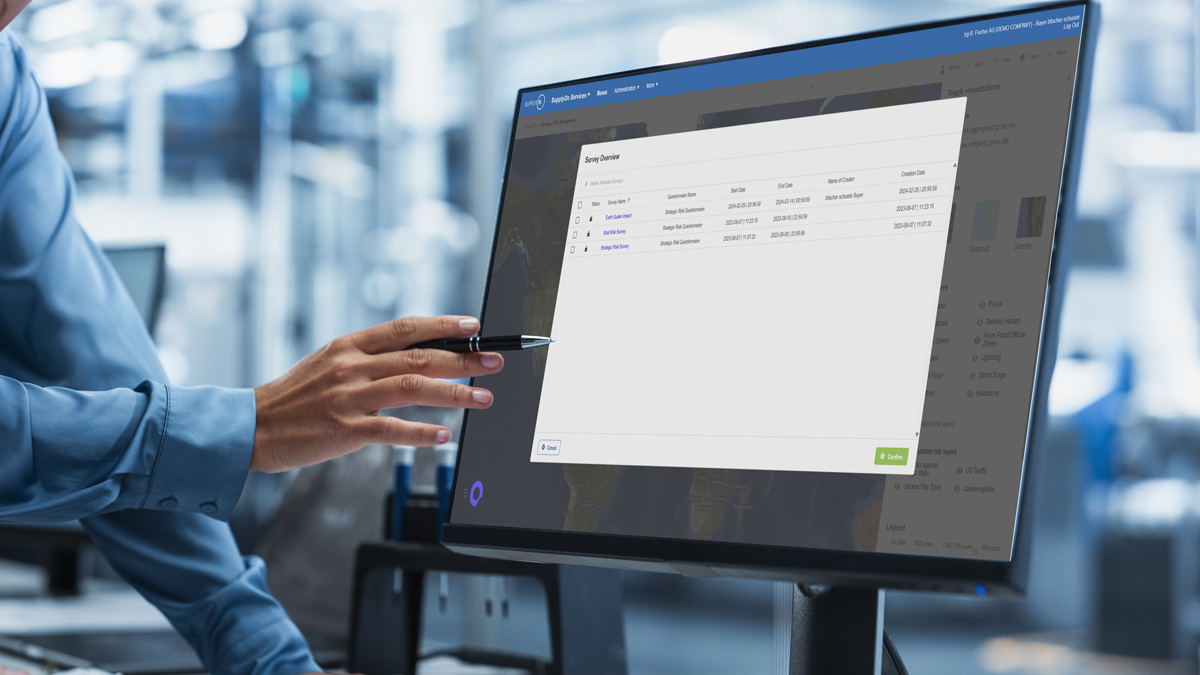
SupplyOn turns supply chain risk management into a collaborative process. Teams can mark affected regions or suppliers, trigger surveys directly, collect impact assessments from suppliers, and use the results to support mitigation and recovery activities. Companies connect risk management to the broader SupplyOn platform. This allows them to reflect risk evaluations directly in operational supply chain processes instead of isolating them in a separate tool.
Key features
- Survey triggering and supplier notifications for fast impact assessment
- Structured collection of supplier feedback and impact data
- Integrated collaboration and connection to operational processes
Impact
- Less manual outreach during disruptions
- Faster supplier feedback
- Better coordination of mitigation

Act earlier and reduce disruption impact across the supply chain
The main value drivers come from earlier anticipation, faster impact assessment, and more effective mitigation based on real supply chain context.
Clear exposure. Direct impact visibility. Faster mitigation when supply is at risk.
Frequently Asked Questions
Move from risk awareness to risk-ready action
Connect supplier exposure, incident impact, material risk, and mitigation workflows in one structured process – so your teams can anticipate disruption earlier, respond faster, and protect supply with greater confidence.