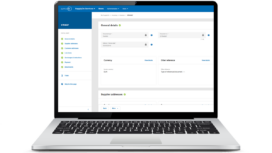
- Invoicing
Turn every inbound supplier invoice into a compliant, validated, automation-ready process
Invoice automation breaks down when inbound channels, formats, and country rules are fragmented
Most finance teams are not struggling with invoices because they lack systems. They are struggling because invoices arrive through too many channels, in too many formats, under too many country-specific rules. Some suppliers are fully integrated. Others send PDFs by email. Some countries require government-platform exchange. Others do not. Meanwhile, AP teams still need one clean, validated invoice file that can be processed, clarified, booked, and paid without constant exception handling. SupplyOn helps manufacturers create one finance-controlled inbound model for all supplier invoices — regardless of supplier maturity, invoice format, or country requirement.
Transform inbound invoicing into a central AP control process
SupplyOn positions Invoicing as the quality gate for inbound supplier invoices. Instead of letting invoice traffic flow through disconnected mailboxes, local interfaces, or country-specific workarounds, teams can centralize intake, validation, enrichment, status handling, and supplier communication in one finance-ready process. That makes invoicing not just more digital, but more controllable, more compliant, and more automation-ready.
One inbound model for every supplier and every country scenario
SupplyOn is designed to handle the real complexity of inbound invoicing. Fully onboarded suppliers can invoice through SCC or AirSupply using web, upload, PO-flip, or direct M2M channels. Invoice-only suppliers can use the Public Invoice Portal with self-registration. Mandatory eInvoicing and CTC scenarios can be handled through government-platform integration where required. This matters because AP automation only scales when the process can accommodate both highly integrated suppliers and long-tail suppliers without splitting invoice control across separate systems.
Key features
- Invoicing via SCC and AirSupply for fully onboarded suppliers
- Public Invoice Portal for invoice-only suppliers
- Government-platform integration for mandatory eInvoicing scenarios
- Upload, email, XML, PO-flip, and M2M direct-integration options
- One central inbound channel across all supplier invoice flows
Impact
- Better control across fragmented invoice channels
- Faster rollout of digital invoicing across the full supplier base
- Lower reliance on country-specific or supplier-specific workarounds
- Stronger AP standardization across domestic and cross-border invoice flows
Validation, enrichment, and automation-ready invoice quality
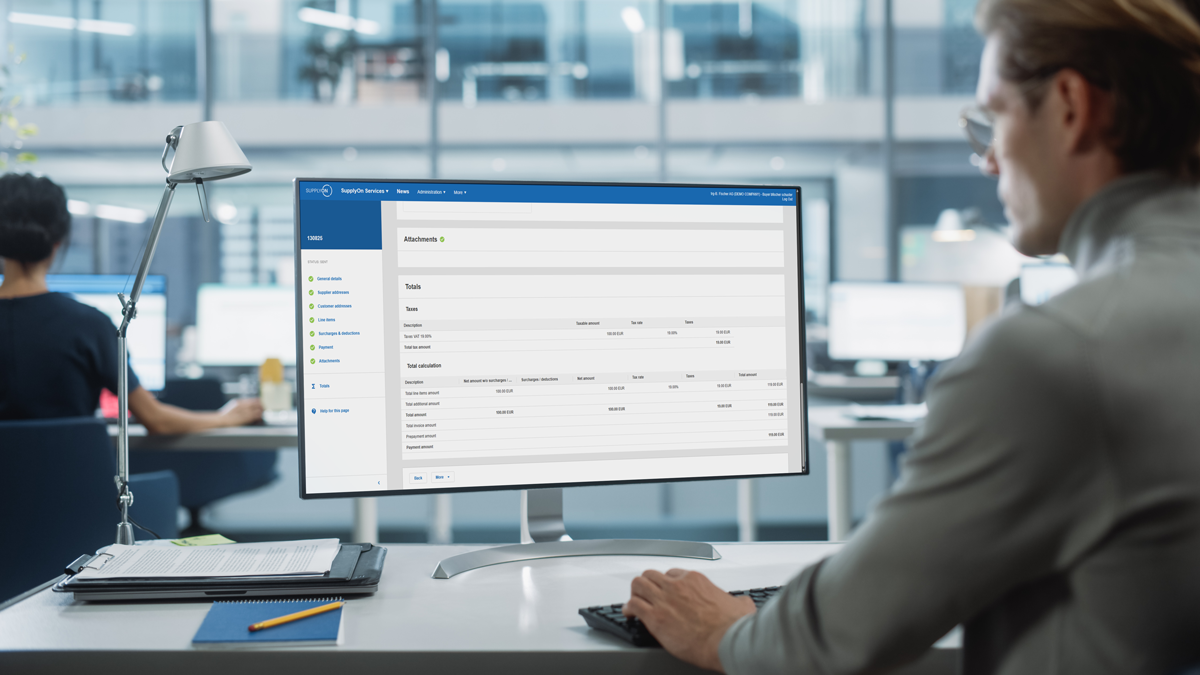
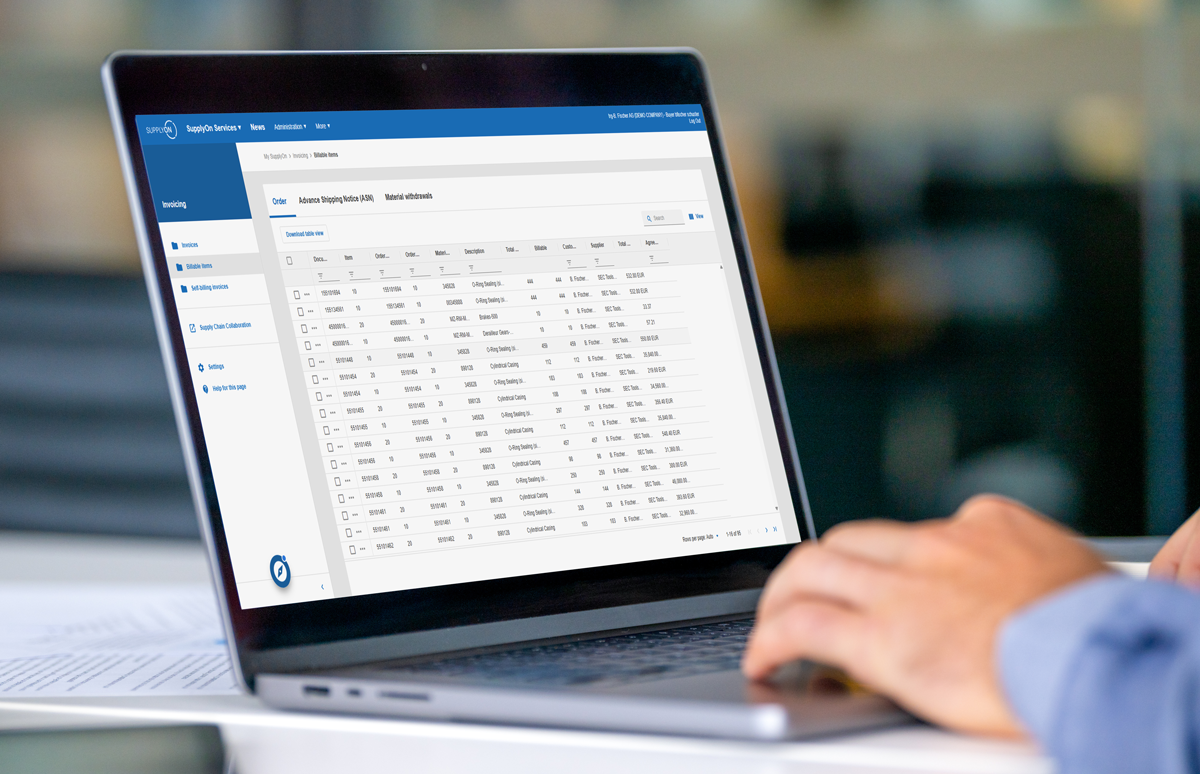
The real value of digital invoicing is not receiving a file. It is receiving the right file in the right quality. SupplyOn validates invoices against legal, business, and customer-specific rules, enriches them where needed, and supports invoice creation based on demand data such as purchase orders, ASN, goods receipt, or material withdrawals. For non-structured invoice inputs, AI-based document extraction converts PDF and scanned-image invoices into machine-readable invoice files. This is especially relevant for AP teams that need one automation-ready invoice output even when suppliers do not all behave the same way.
Key features
- Legal, business, and customer-specific invoice validation
- Demand-based invoice creation from PO, ASN, goods receipt, or withdrawals
- PO-flip and AI-based pre-filling of invoice details
- AI-based document extraction for PDF and image invoices
- Human verification option where extracted data needs clarification
Impact
- Better invoice quality before ERP posting
- Higher auto-booking readiness across mixed supplier channels
- Less manual effort in invoice correction and data entry
- Faster invoice creation and fewer supplier-side invoicing errors
Status transparency, exception handling, and AP control
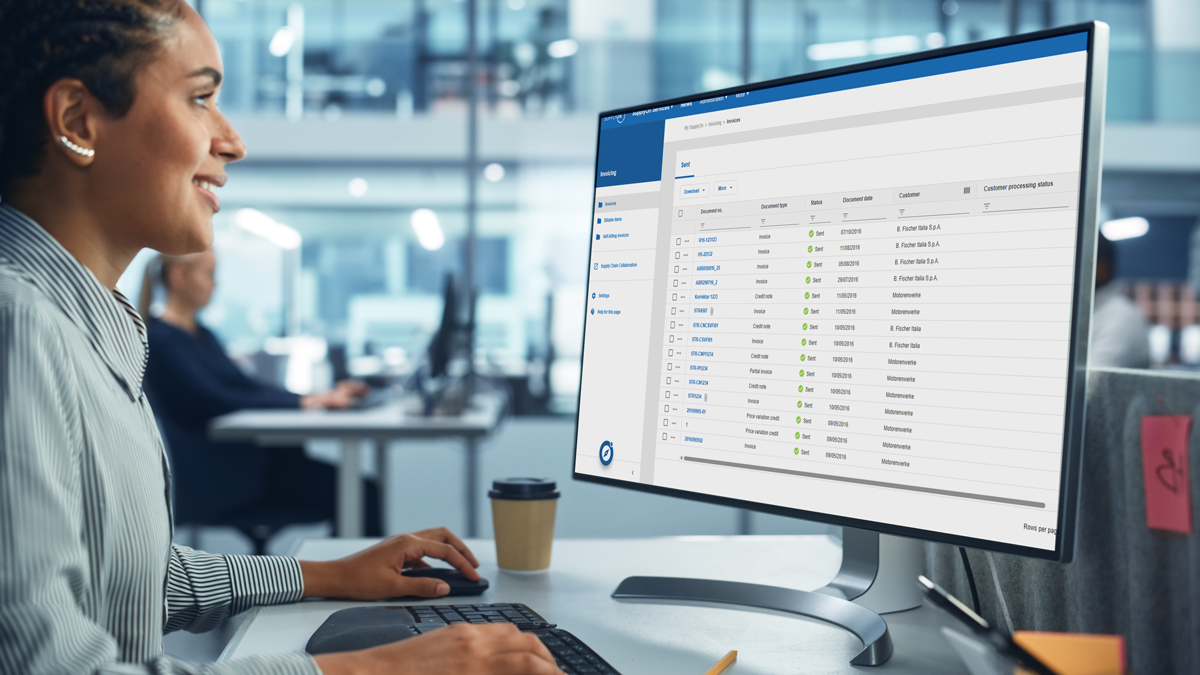
Finance teams need more than invoice intake. They need transparency and control once the invoice enters the process. SupplyOn provides invoice-status visibility for suppliers and customers, including platform status and customer-side processing status. For AP teams, the Invoice Customer Cockpit gives one place to review all invoices, park invoices with irregularities, edit or clarify exceptions, and proactively define which deviations should lead to manual review, approval, or rejection. This helps reduce supplier inquiries, improve communication quality, and keep exception handling inside a governed AP workflow.
Key features
- Supplier-side invoice overview and status visibility
- Customer processing status visible back to suppliers
- Public status access for any supplier via invoice number, date, and amount
- Invoice Customer Cockpit for edit, review, approve, reject, and clarification handling
- Invoice Inquiry add-on for supplier-side invoice inquiries and dunning-related questions
- Invoice Import add-on for unified invoice-status visibility across invoice sources
Impact
- Less manual inquiry traffic into finance and procurement teams
- Better transparency for suppliers without separate ticket systems
- Stronger AP control over invoice exceptions and deviations
- Faster clarification and cleaner downstream posting and payment processes
Relevant ROI for invoicing
The invoicing materials provide strong finance-specific value proof. The biggest gains come from consolidating all inbound invoice channels, increasing auto-booking readiness, reducing supplier inquiry traffic, and lowering the total AP effort required to validate, clarify, and process invoices globally.
Less AP effort. Better invoice quality. Stronger compliance and automation across every inbound channel.
Frequently Asked Questions
Make every supplier invoice easier to validate, automate, and control
Connect inbound channels, validation, AI-based extraction, country compliance, supplier status transparency, and AP exception handling in one structured invoicing process — so your teams can reduce manual effort, increase automation, and scale compliant invoice processing globally.